


6 transnationale ValNAM-projecten voor stimulering van proefdiervrije wetenschap
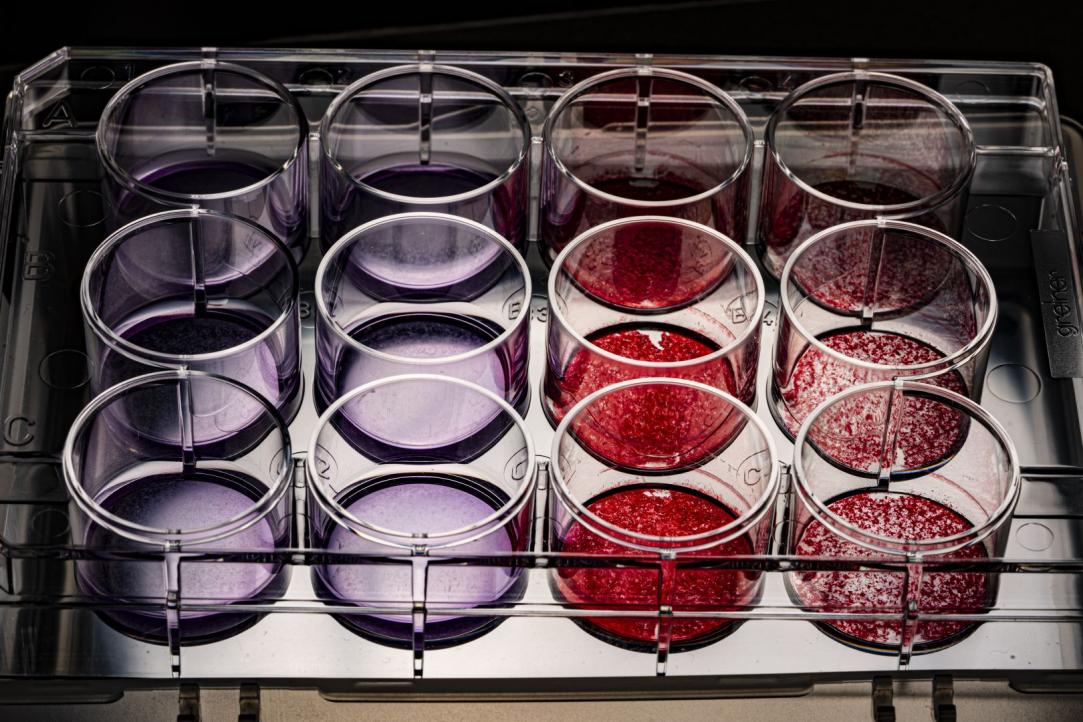
Het bevorderen van de transitie naar mensrelevante wetenschap vereist een robuuste validatie van New Approach Methodologies (NAM’s) en sterke publiek-private samenwerkingen om de kloof naar acceptatie door regelgevende instanties te overbruggen.
Om dit te bereiken hebben ZonMw en het Duitse federale ministerie van Onderzoek, Technologie en Ruimtevaart (BMFTR) de handen ineengeslagen met de 'ValNAM'-call, waarbinnen nu zes toonaangevende, bilaterale onderzoeksprojecten zijn gehonoreerd.
Het cruciale belang van NAM-validatie
Bij het testen van de veiligheid van stoffen en geneesmiddelen zijn proefdiermodellen lange tijd de traditionele standaard geweest. Echter, "translationeel falen" – de moeilijkheid om diergegevens te vertalen naar de menselijke biologie – blijft een hardnekkig knelpunt. Hoewel innovatieve New Approach Methodologies (NAM’s), zoals celkweken en computermodellen, snellere, kosteneffectieve en zeer mensrelevante alternatieven bieden, zijn ze nog niet de norm. Het voornaamste obstakel is dat de meeste NAM’s niet beschikken over de formele validatie en standaardisatie die vereist is voor goedkeuring door regelgevende instanties. Het overbruggen van deze kloof door wetenschappelijke experts op één lijn te brengen met regelgevers is essentieel om deze methoden te vestigen als juridische, betrouwbare veiligheidsstandaarden.
De opzet van de ValNAM-call
Om deze uitdaging aan te gaan, stelden ZonMw en BMFTR de gezamenlijke "ValNAM: Closing the gap"-call in om duurzame onderzoeksconsortia tussen Nederland en Duitsland op te bouwen. De call vereiste een publiek-private samenwerkingsstructuur (PPS), waarbij elk internationaal consortium moest bestaan uit ten minste één publieke en één private partner. De consortia stelden zich als doel een bestaande NAM gedurende een projectduur van drie jaar verder te ontwikkelen langs de Technology Readiness Levels (TRL's). Voor deze call was een totaalbudget van € 7,5 miljoen beschikbaar, met als uniek kenmerk dat er geen maximumbudget per project was vastgesteld; in plaats daarvan moesten aanvragers het exacte budget rechtvaardigen en aanvragen dat nodig was om hun specifieke projectomvang succesvol uit te voeren.
Deze opzet maakt ValNAM uniek èn toonaangevend: de strikte focus op validatie in plaats van initiële ontwikkeling van een NAM, gecombineerd met een flexibele financieringsstructuur die consortia in staat stelt het budget af te stemmen op hun specifieke behoeften. De call werd uitgevoerd in een productieve samenwerking door de Duitse Projektträger Jülich (PTJ) en het ZonMw-programma 'Meer Kennis met Minder Dieren' (MKMD), dat wordt gefinancierd door het Ministerie van Landbouw, Visserij, Voedselzekerheid en Natuur (LVVN). Financiële middelen voor deze call werden ook ter beschikking gesteld door Stichting Proefdiervrij.
Zeer competitieve resultaten
De call kon rekenen op een enorme belangstelling vanuit de wetenschappelijke gemeenschap, wat leidde tot een zeer competitieve selectieprocedure. Er werden in totaal 38 projectvoorstellen ingediend door samenwerkende transnationale consortia, wat de noodzaak voor dit soort financieringsinstrumenten aantoont. Na een rigoureus peer-review- en interviewproces door een internationaal expertpanel, werden 6 hoogkwalitatieve projecten officieel geselecteerd voor financiering. Deze gehonoreerde projecten beginnen nu aan hun driejarige traject om baanbrekende, proefdiervrije innovaties om te zetten in gevalideerde instrumenten voor toezichthouders.
-
SteatoTest: A robust in vitro steatotic hepatocyte system for the development and testing of personalized therapies against human fatty liver disease
Anja Zeigerer, Jan Hengstler, Bart van de Sluis, Anett Ullrich
The global prevalence of metabolic syndrome and related diseases, including type 2 diabetes, metabolic dysfunction-associated steatotic liver disease (MASLD), and cardiovascular disorders, is rapidly increasing. MASLD may affect up to two billion people within the next decade, creating a major socioeconomic burden. Human-relevant, high-throughput systems are urgently needed. We developed SteatoTest, a robust in vitro human steatotic hepatocyte model that recapitulates key MASLD features, including steatosis, insulin resistance, mitochondrial dysfunction, and inflammation. It uses 3D cultures of primary hepatocytes from individual donors, enabling assessment of sex- and genotype-specific drug responses and RNAi-based testing. This project aims to validate SteatoTest for regulatory use by assessing reproducibility, inter-donor variability, target validation capacity, and standardization, with input from industry and regulatory stakeholders.Interlaboratory Validation of ReproTracker
Amer Jamalpoor, Marta Barenys-Espadaler, Daniela Salvatori, Kristina Bartmann, Els Adriaens, Paul Carmichael
Identifying Developmental and Reproductive toxicity is a vital part of toxicological assessment when evaluating the safety of drugs and chemicals. Traditionally, it involves in vivo testing using rats and rabbits. Given the considerable variation in drug responses across species, and the financial and ethical challenges associated with animal testing, the development of advanced cell-based assays is imperative for effectively identifying potential teratogens. The ReproTracker assay is focused on the differentiation of human induced pluripotent stem cells towards three germ layer specific cell types. These differentiations have demonstrated to capture multiple processes key in embryonic development that are susceptible to exogenous disruptions. While ReproTracker has demonstrated its potential in predicting teratogenicity of chemicals, proper inter-laboratory validation (transferability and reproducibility studies) is essential for the assay to be qualified in regulatory spaces.ThyroTransVal: Validation of a Sandell-Kolthoff-based MCT8 activity assay (MCT8-SK)
Kostja Renko, Sophie Rigal, Michael Oelgeschlaeger, Timo Hamers, Douwe Molenaar, Ulrich Schweizer, Doreen Braun, Nina Hambruch, Sjoerd Verkaart and Jelle Vriend
The ThyroTransVal project will validate an in vitro method to identify potential endocrine disrupting chemicals that inhibit the transport of thyroid hormone across the cell membrane. The focus is on the inhibition of MCT8 (Monocarboxylate Transporter 8), which is an important protein for thyroid hormone transport into the (developing) brain and across the placenta. The aim is to transfer this method from the developer laboratory to other laboratories and verify its reproducibility through a blinded ring trial. Transfer and validation is documented in a validation report and reviewed by external experts, meant to be adopted as an OECD test guideline. This 3-year project consists of 3 phases:- Final characterization of the test system for cell bank deposition, potential method adaptation to an animal-free medium, and method transfer to 4 partner laboratories.
- A ring trial with ~25 blinded test substances.
- Method submission as an OECD test guideline based on the validation report.
Cardio4All: Validating an Integrated Multi-Tier Human-Relevant Platform for Predictive In Vitro Cardiotoxicity
Peter Loskill, Richard Davis, Christian Maass
Some medications can damage the heart. This is an important reason why drugs fail during development or cause problems in patients. Current safety tests do not always accurately reflect how the human heart responds, meaning harmful effects are sometimes missed. With this project, we aim to better predict whether medications cause heart damage. We will develop and validate a new testing platform using human cells and computer models. This platform should better identify harmful medications and reduce the use of animal testing. We aim to demonstrate that this approach is reliable and produces comparable results across laboratories. To achieve this, we are combining a 3D heart model made from stem cells, an organ-on-a-chip system, and computer models. By testing known medications and comparing results, we will show how this can improve drug safety.GAIN: Gastrointestinal Absorption using Integrated NAMs
Susana Proenca, Evita van de Steeg
Currently, no reliable animal free method exists to predict how substances are absorbed in the human gut, even though most medicines, nutrients, and chemicals enter the body orally. The GAIN project aims to develop a human relevant testing and modelling approach that can accurately predict how much of a substance is absorbed and becomes available in the body. The project combines an advanced human intestinal tissue model with computer models that simulate biological processes. A broad range of compounds, donor to donor differences, and strict quality controls are included. The goal is to deliver a robust, animal free method that supports industry and regulators in making safe and efficient decisions.AdipoNEXT: Validation of a High-Content Screening Adipogenesis Assay for NEXT generation risk assessment
Jorke Kamstra, Kristin Schubert, Nina Hambruch, Anne Kienhuis
Metabolism-disrupting chemicals are substances that interfere with metabolism and energy balance and can thereby contribute to obesity. One key mechanism affected by these chemicals is the formation of fat cells (adipogenesis). At present, validated test methods for the regulatory assessment of this effect are lacking. AdipoNEXT aims to validate a human-relevant in vitro assay based on the differentiation of mesenchymal stem cells into adipocytes. The model has been pre-validated and was recently improved by implementing automated microscopy, enabling accurate and quantitative measurements. Within AdipoNEXT, the reproducibility, sensitivity, and specificity of the assay will be assessed, and the model will be refined by addressing sex-specific differences and adipocyte function. The outcome will be a validated new approach method supporting regulatory identification of metabolism-disrupting chemicals, providing a basis for an OECD test guideline.