


Blog: Do antibodies that target the patient’s own body cause ME/CFS?
A disrupted immune system might be behind ME/CFS. Some researchers think that antibodies that target the patient’s own body, rather than pathogens, might be a factor. But what are those antibodies, and what tissues do they attack? Jeroen den Dunnen, an immunologist at Amsterdam UMC, tells us more.
The ME/CFS research programme funds biomedical research on the causes, diagnosis and treatment of ME/CFS. The first studies got underway in 2023. In this series of blogs the researchers tell us more about what they are doing, and what their ME/CFS study aims to deliver. A new blog will be published each month; this is the seventh in the series.
Disrupted immune response
Everyone has antibodies that target their own body. Most of them are harmless. But problems arise if they start are not correctly programmed, and start to ‘attack’ tissues, responding as they would towards a pathogenic virus or bacterium.
‘This research was prompted by the fact that we saw pathogenic antibodies in the blood of post-COVID patients. We discovered this when we transferred the antibodies to mice, and they got sick too’, says Jeroen den Dunnen, an immunologist at Amsterdam UMC. ‘This is an important factor in the search for proof that there’s something wrong with the antibodies of post-COVID patients, and that they cause the extreme fatigue or increased sensitivity to pain. Since the symptoms of post-COVID are similar to those of ME/CFS, we think people with ME/CFS might also have disrupted antibodies that attack their own body. We’re studying this by repeating the experiment with mice using antibodies from the blood of people with ME/CFS', says Den Dunnen.
Search for antibodies
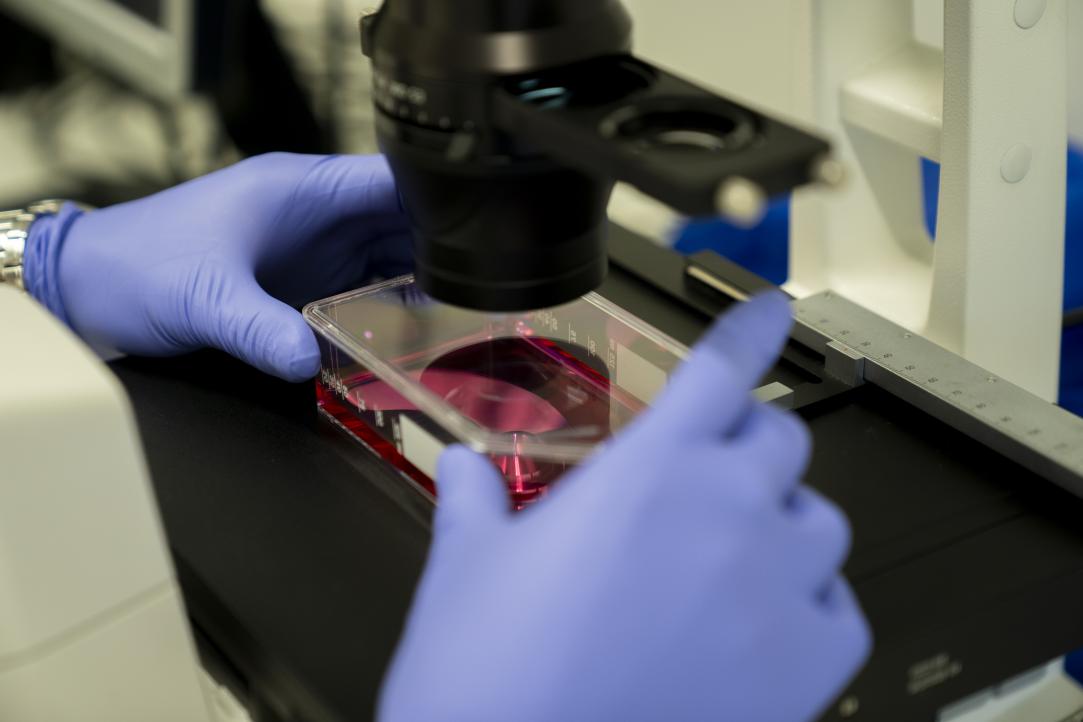
‘First we need to know which antibodies are pathogenic in people with ME/CFS. So we’re starting by screening 21,000 antibodies in ME/CFS patients. A small group of 25 to 35 people with ME/CFS is enough to find them. We take blood from the patients and examine it in the laboratory. The next step is to look at what tissues in the body the antibodies bind to. Is it brain tissue, heart tissue or musculoskeletal tissue? We can visualise this in the lab by giving specific antibodies a particular colour. As soon as we know what tissues the antibodies bind to we’ll be a step further and then we can investigate the effects of the pathogenic antibodies in people with ME/CFS.'

We saw that post-COVID patients have pathogenic antibodies in their blood
Testing pathogenic antibodies in subgroups of patients
'We expect the antibodies of ME/CFS patients to be able to bind to several types of tissue, so we think that a number of tissues are being “attacked”. But exactly which ones might differ from one individual to another. This might explain why people with ME/CFS have such varied symptoms. We think we can get some clarity on this by forming subgroups of people with ME/CFS. That will also enable us to investigate exactly how the pathogenic antibodies work in these tissues. We’ll test this in mice, who will be given the different combinations of antibodies, like when we exposed mice to the pathogenic antibodies of post-COVID patients. We expect them to fall ill from the antibodies of ME/CFS patients too. But these mice might have different symptoms from the ones that were given antibodies from people with post-COVID.’
No more animal testing
‘We hope to continue without animal testing on the basis of the results of the mouse tests. We’ll grow brain cells or musculoskeletal cells in petri dishes in the lab instead. We’ll also be able to use the models for future research into diagnosis and treatment, as soon as we know more about the pathogenic antibodies.
‘Once we know exactly how the pathogenic antibodies respond to different tissues in ME/CFS patients, we can proceed to develop customised treatments. Later we hope to be able to test antibodies from the blood of any ME/CFS patient on various cultivated cells. Then we’ll know what tissues are affected, and what kind of antibodies are at work in that particular individual. Then we can develop a customised treatment for them.'
Valuable input from patients
‘Every 2 or 3 months we get round the table with patient representatives and discuss the project, topical issues and ME/CFS in general. The representatives give us feedback and contribute really useful ideas. I learn a lot from their feedback. They look at the research questions differently from researchers. That’s really helpful. Other researchers looking at things like post-exertional malaise (PEM) focus mainly on physical exertion. However, patients tell us that they can often avoid physical work, but not cognitive effort. We need to address that, maybe in follow-up projects. Since most researchers focus mainly on one specific topic, they sometimes become a bit blinkered, and fail to see what is most important overall to the person who has ME/CFS.'
Pathogenic antibodies from post-COVID patients
In previous research Den Dunnen introduced antibodies from the blood of post-COVID patients into laboratory animals to see if they were pathogenic. ‘We were able to divide the antibodies from patients into three groups, on the basis of the mix of different antibodies in the blood. Each group of antibodies caused a different set of symptoms in the mice. Antibodies from patients who suffer pain made the mice much more sensitive to pain, for example. Antibodies from post-COVID patients with PEM made the mice less inclined to exercise and made them run slower.’
About Jeroen den Dunnen
ZonMw’s mission as regards animal testing
As a funder of medical and biomedical research and health innovation, we encourage the development of new models that do not involve animal testing, and the acceptance and implementation of existing methods that do not require animal testing. Where this is not yet possible, we focus on more effective use of results from animal testing.
More information
For more information on the research project and ZonMw’s ME/CFS research programme, visit the pages below.
- Go to the project page
- Go to the consortium website
- Go to the ME/CFS Programme page
- Go to the page on the theme of fatigue
Text: Ilse Bos
Photography: Robert Tjalondo