


Blog: Changes in the brains of patients with ME/CFS
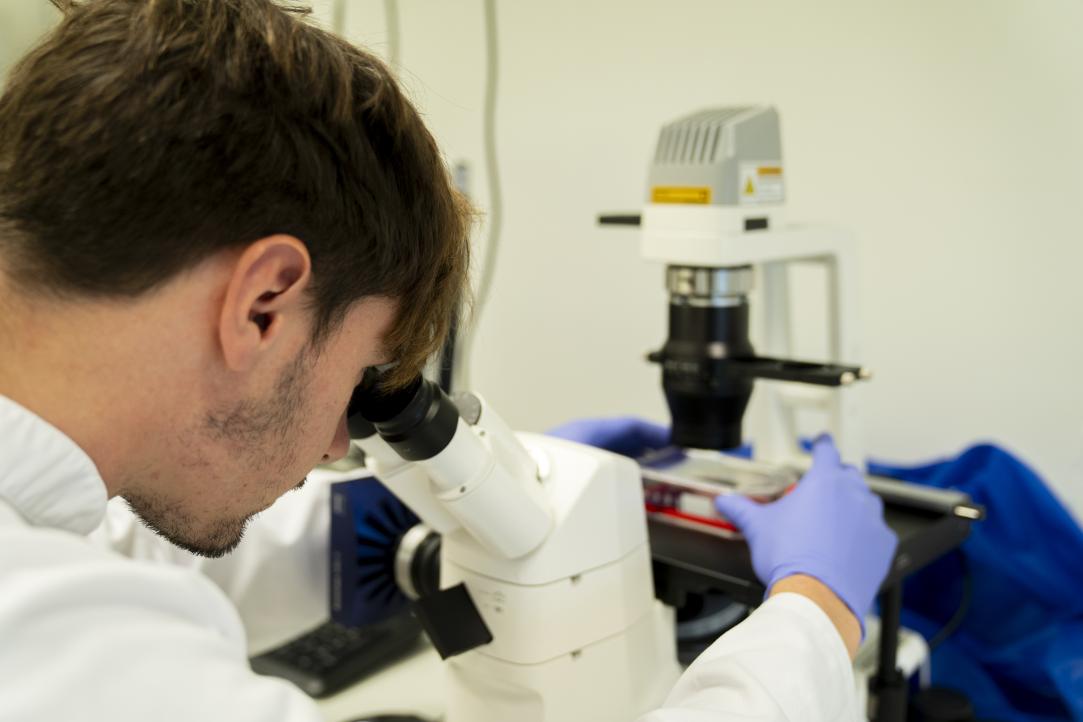
Little is known about possible changes in the brains of ME/CFS patients. It is not easy to investigate, as there is little access to brain tissue from people with ME/CFS. The Netherlands Brain Bank has established a donor programme to enable studies of the stress response in brain cells in people with ME/CFS.
The ME/CFS research programme funds biomedical research on the causes, diagnosis and treatment of ME/CFS. The first studies got underway in 2023. In this series of blogs the researchers tell us more about what they are doing, and what their ME/CFS study aims to deliver.
The ME component of ME/CFS, myalgic encephalomyelitis, means 'inflammation of the spinal cord (myelitis) and/or brain accompanied by muscle ache (myalgia)'. However, we know little about changes in the brains of ME/CFS patients. Professor Inge Huitinga and Dr. Felipe Correa da Silva of the University of Amsterdam hope to change all that. 'We still know little about what happens in the brains of ME/CFS patients, because it’s difficult to obtain brain tissue from people with ME/CFS. So we have set up a donor programme at the Netherlands Brain Bank to register as many ME/CFS patients as possible who are willing to donate brain tissue for scientific research after their death. We are doing this in close collaboration with ME/CFS patient groups', says Huitinga.
Brain donor programme
To establish whether changes in the brain cause neurological symptoms, Huitinga and Correa da Silva will examine the brain tissue in detail over the next four years. 'We are looking at changes in the immune system and anomalous stress responses in the brain’, says Huitinga. ‘The brain energy metabolism might also be affected, so we will be looking at these mechanisms in detail.' Collecting brain tissue through a brain donor programme will make further research possible, and this should yield more knowledge of the mechanism and the possible onset of this illness, thus helping to improve diagnosis and treatment, which will benefit patients, doctors and researchers.
'19 people with ME/CFS had previously registered as donors with the Netherlands Brain Bank. Since the research project started in 2023, we have had around 22 new registrations. We are publicising the brain donor programme with flyers, a website and articles in patient magazines, to attract more donors. If we approach more than a thousand people with ME/CFS, we should get around 200 extra donors. The Netherlands Brain Bank knows from experience that only 1 in 5 people register as donors. Out of every 200 brain donors with ME/CFS, an average of 5 a year will die. It is important to gain access to the brain tissue immediately after death, to properly investigate any changes in the brain’, Huitinga explains.
Powerhouses
‘The first research on brain tissue, from a few donors with ME/CFS, has already taken place. We see differences compared with healthy brain donors. We also see clear changes in areas of the brain associated with control of stress responses in people with ME/CFS, compared to healthy donors. These are initial observations, and we still have to confirm them in more brain donors. Changes in stress responses can impact the energy management in the cells. Long-term stress can impair the functioning of the energy powerhouses of the cell, the mitochondria. This then disrupts energy production in the brain cell, which is important for the proper functioning of the nerves and immune responses in the brain.
‘To study the mitochondria in the cell, we have to treat and prepare the brain tissue in a certain way, to be able to examine it under an electron microscope at very high magnification. As soon as we have enough brain tissue, we can investigate whether the mitochondria have indeed been damaged.'
Neurological biomarkers
'By studying the brain tissue of donors with ME/CFS, we hope to learn more about the cause of their neurological symptoms. We might discover neurological biomarkers that are related to the symptoms. These might help with early recognition of the disease, and therefore lead to better diagnosis. But that is a long road.'
Health brain donors needed too
‘To conduct our study properly, we need many more brain donors, including healthy people. Healthy brain donors are just as important for good research into ME/CFS, because every bit of brain tissue from a donor with ME/CFS has to be compared with a bit from the same area of the brain of a donor without ME/CFS, otherwise we will not know what has changed. The infrastructure of the Netherlands Brain Bank is not the same as that of the national donor register for transplant organs, which is why we don’t have many brains from healthy donors.'
Acknowledgement of ME/CFS
Both researchers emphasise that more research into ME/CFS as a brain disease is both desirable and urgently needed. ‘I believe that our research will contribute to better diagnosis of ME/CFS,’ says Correa da Silva, ‘and that is what keeps me motivated to work on it.’ ‘As the head of the Netherlands Brain Bank, I felt that more research should be done on this, because the disease is by no means always acknowledged,’ Huitinga explains. ‘So far we have seen enough evidence to regard ME/CFS as a brain disease, so I would have preferred it if we had started this study of changes in the brains of people with ME/CFS sooner.’
More information
For more information on the brain donor programme, visit the website of the Netherlands Brain bank.
About the researchers
About the researchers

More information
For more information on the research project and ZonMw’s ME/CFS research programme, visit the pages below.
Text: Ilse Bos
Photography: Netherlands Institute of Neuroscience