


Blog: Understanding ME/CFS better by monitoring symptoms after exertion
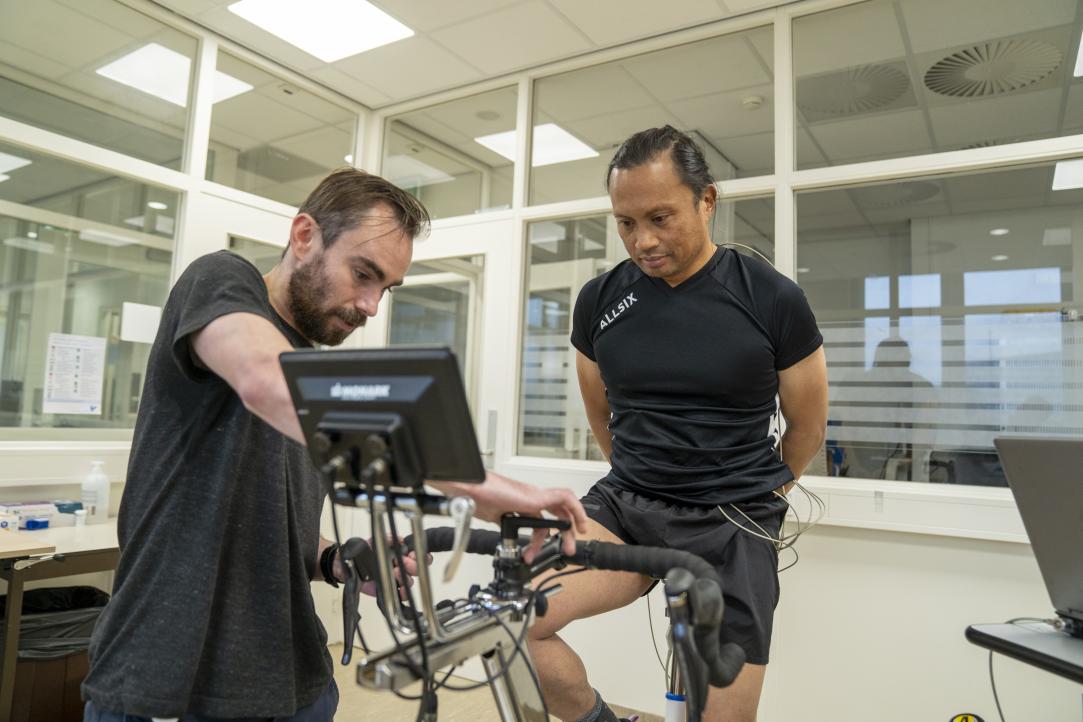
Exercise has a positive impact on many medical conditions, but something unusual happens in people with ME/CFS, who actually experience a worsening of their symptoms after physical exertion. It is not clear why this is the case. So Inge Zijdewind and Leda Maffei, researchers at Groningen University Medical Centre (UMCG) will investigate this.
The ZonMw ME/CFS research programme funds biomedical research on the causes, diagnosis and treatment of ME/CFS. The first studies started in 2023. In this series of blogs, the researchers tell us more about what they are doing, and what their ME/CFS study aims to deliver. A new blog will be published each month; this is the first in the series.
People with ME/CFS experience symptoms that differ from those in other illnesses with broadly similar symptoms, such as auto-immune diseases. For an ME/CFS diagnosis, a patient not only needs to experience chronic fatigue, but also a worsening of symptoms after cognitive or physical exertion – also known as post-exertional malaise (PEM). Recovery is slow, or completely absent.
The severity of the symptoms differs from one individual to another. What we know at this stage is that ME/CFS adversely affects various organ systems. Over the next few years, Inge Zijdewind and Leda Maffei plan to research which ones are affected, and what factors play a role, in the ZonMw-funded project ‘Post-exertional malaise”, a starting point to investigate and understand ME/CFS’. The results of the study should help us to understand what effect various activities have, and how they can exacerbate symptoms.
Many symptoms in different organs
‘What we know so far is that the disease affects the functioning of various organs in the body, and that the pattern of symptoms is not the same in every patient’, says Inge Zijdewind. ‘Many patients with ME/CFS experience a strong increase in their heart rate when they stand up, for example. We also find that lots of people suffer from muscular problems or “brain fog”, so we want to measure the symptoms in the different organ systems in the body. This should help us identify the link between the symptoms in different patients with PEM, and understand it better.’
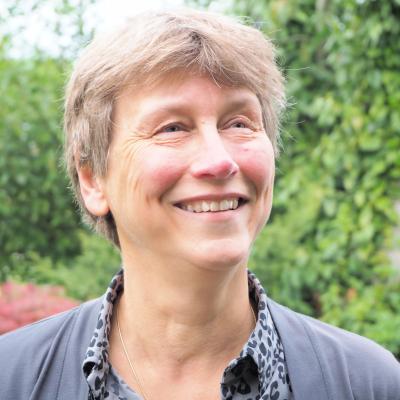
My own personal interest in this research comes from a desire to understand the causes of the worsening of symptoms after activity, and the role of the nervous system
50 patients
‘We will launch the study in April 2024 with 100 subjects, 50 of whom will be patients, plus 50 people with a similar lifestyle as a control group. We will invite them in twice for 2 consecutive days of experiments. On day 1 we will take blood samples and ask them to engage in activities involving physical and mental exertion. We will also ask the participants to complete questionnaires about their symptoms. Then we will measure symptoms of fatigue and the physical and mental health of the participants the following day. This will involve things like taking blood pressure and measuring muscle control and blood flow to the muscles, as well as their ability to focus and concentrate on a particular task. We will compare all the measurements from day 2 (if the ME/CFS-symptoms have increased) with day 1. It will also be important to take another blood sample, to measure whether the blood contains different substances from the day before.
‘We will repeat the two-day process a month later, but then the tasks will be performed in an MRI scanner. We will look at the blood flow in different parts of the brain involved in performing various tasks. On the second day we will compare the blood flow in these areas with the results from day 1. Our study design will allow us to identify changes in various organ systems in the body immediately after exertion, and link them to the change in PEM symptoms.
No treatment yet
‘We are conducting this research at UMCG to find out the biological causes of the symptoms experienced by people with ME/CFS. First, we need to know what changes in the body cause the PEM symptoms to appear, before we can take the next step towards a possible treatment. A follow-up to our study might help devise a treatment. We won’t know what treatment or drugs would be appropriate until we know where the cause of the symptoms lies.
Nervous system
‘My own personal interest in this research comes from a desire to understand the causes of the worsening of symptoms after activity, and the role of the nervous system. Almost every organ in our body is controlled by the nervous system. Some patients with symptoms linked to PEM have a higher heart rate when they stand up, and the mechanism that controls this is in the nervous system. But the nervous system also controls changes in the immune system and the locomotor and sensory system. If we knew how the nervous system was involved in these changes, we might be able to take this into account during treatment.
Sharing knowledge
‘Since ME/CFS patients have symptoms similar to other conditions, it will also be useful to share our results with other research groups. PEM symptoms overlap partially with post-Covid syndrome, for example, as the complete lack of energy is very similar. Patients often lack the energy even to start the day, just like people with post-Covid or certain auto-immune diseases.
Collaborations
‘Our research is part of the ME/CFS Lines consortium, which has already pooled a lot of knowledge of ME/CFS. We designed our study in collaboration with patient organisation ME/CVS Nederland. This means we will be considering what patients want to find out about ME/CFS. We will continue to work with them during the study, and will give them interim updates on the outcomes. Patients will be involved through the patient organisation, the Vermoeidheidskliniek and via a call for participants on our website. We will also announced the results of our study on the website (mecfslines.nl). The experiments are expected to continue to the end of 2026 and the first results will be available early in 2027.’
Over de onderzoekers


More information
Text: Ilse Bos, Photography: Robert Tjalondo, private pictures Inge Zijdewind en Leda Maffei