


TeleEPI: Bringing Epilepsy Care from Hospital to Home
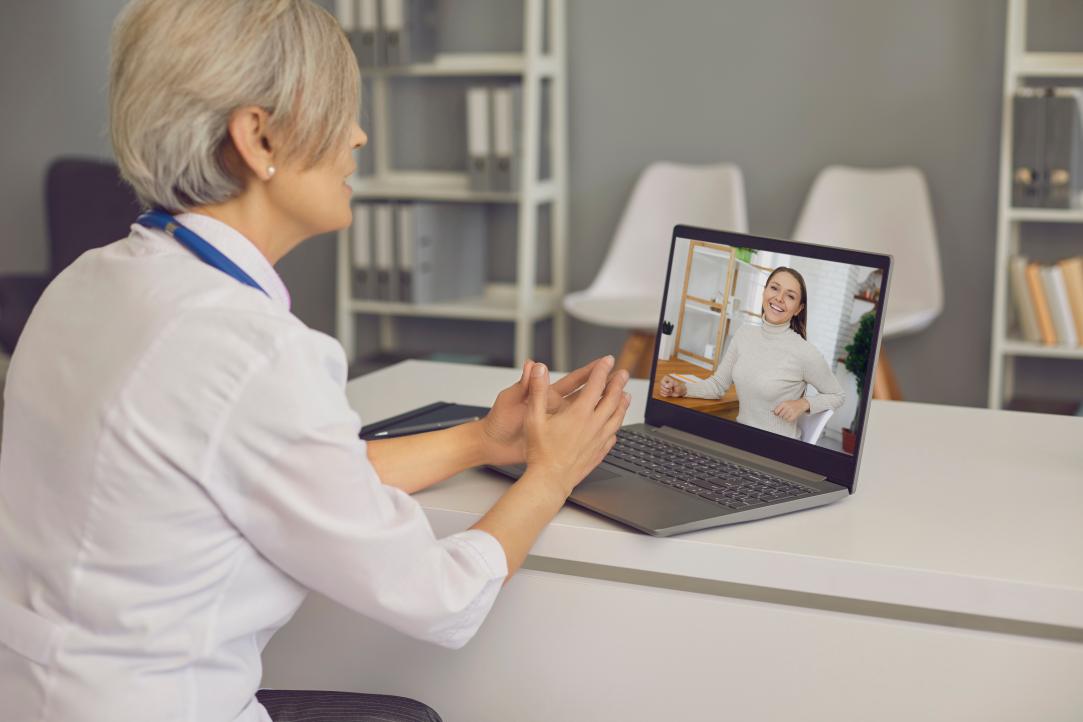
Fewer hospital admissions, better insight into seizures, and treatment that is more closely tailored to patients' daily lives. The TeleEPI project conducts research into how technology and artificial intelligence (AI) can contribute to improved care for people with epilepsy.
Rather than relying on diagnostic snapshots taken in hospital, TeleEPI focuses on continuous monitoring in the home environment, supported by technology and artificial intelligence. This provides a more complete and objective understanding of the condition.
The project is part of the international Transforming Health and Care Systems (THCS) programme. It shows how digital technologies can contribute to a health and care system that is better accessible and future-proof. A site visit in June highlighted how such technologies are being put into practice.
Why is this necessary?
Epilepsy is a complex condition, and gaining a clear understanding of a person’s seizures —and therefore determining the most appropriate treatment — can be challenging. Diagnosis and monitoring still largely take place in hospital. It often relies on short-term measurements and sometimes requiring hospital stays of several days. Moreover, finding the right treatment is often a process of trial and adjustment, with several steps needed to identify the most effective medication.
People with epilepsy experience their condition primarily in everyday life: seizures are unpredictable and not always visible, noticeable or measurable. As a result, epilepsy care is intensive, burdensome for patients and challenging for healthcare professionals. Furthermore, important information often comes from seizure diaries in which patients record their seizures — records that are not always complete or reliable.
How does TeleEPI work?
TeleEPI is developing an approach in which a significant part of care is delivered remotely. At its core is a digital telemedicine platform that combines several functions:
- Continuous monitoring of patients at home;
- Digital recording of seizures and patient experiences;
- Direct and rapid communication between patients and healthcare professionals.
A key component is the use of mobile EEG systems, which allow brain activity to be monitored over extended periods outside hospital. AI is used to analyse part of this data automatically, significantly reducing processing time and enabling healthcare professionals to gain insights more quickly.
This combination provides a more comprehensive and objective understanding of a patient’s condition in everyday life.
Broader perspective
TeleEPI reflects a broader trend in healthcare: a shift from snapshots to continuous insight, and from hospital to home. In this context, hospitals are increasingly taking on the role of coordination hubs. In-person care remains essential but is delivered more selectively. The result is a hybrid care model in which care at home and care in hospital complement one another.
Within THCS, initiatives such as TeleEPI are supported to help keep healthcare accessible and affordable. TeleEPI demonstrates how technology can serve not merely as a tool, but also as a driver of transforming healthcare.
By combining the latest technologies, we can provide our patients with personalised care and faster treatment.
Looking ahead
The coming years will show how well this approach works in practice, particularly in terms of usability and how easily it can be integrated into existing healthcare systems.
Mireille Bourez-Swart, TeleEPI project leader: “By combining the latest technologies, we can provide our patients with personalised care and faster treatment.”
International collaboration
TeleEPI is a European collaborative project involving partners from the Netherlands, including SEIN, as well as university medical centres and technical partners in Austria, Belgium and Switzerland.
The ZonMw-funded project runs from 2024 to 2027 and is currently in the development and testing phase. The first practical applications are expected from 2026 onwards.
New grant awards under THCS
TeleEPI is one of the projects funded under the first THCS call, 'Healthcare of the Future' (2023). Funding decisions have also recently been announced for the new call, 'Better Care Close to Home' (2025). Several projects involving Dutch partners were selected under this call, focusing on bringing care closer to home and making use of digital technologies and new innovations. These include: