


How to achieve impact through research. Implementation tips from Climate and Health researchers
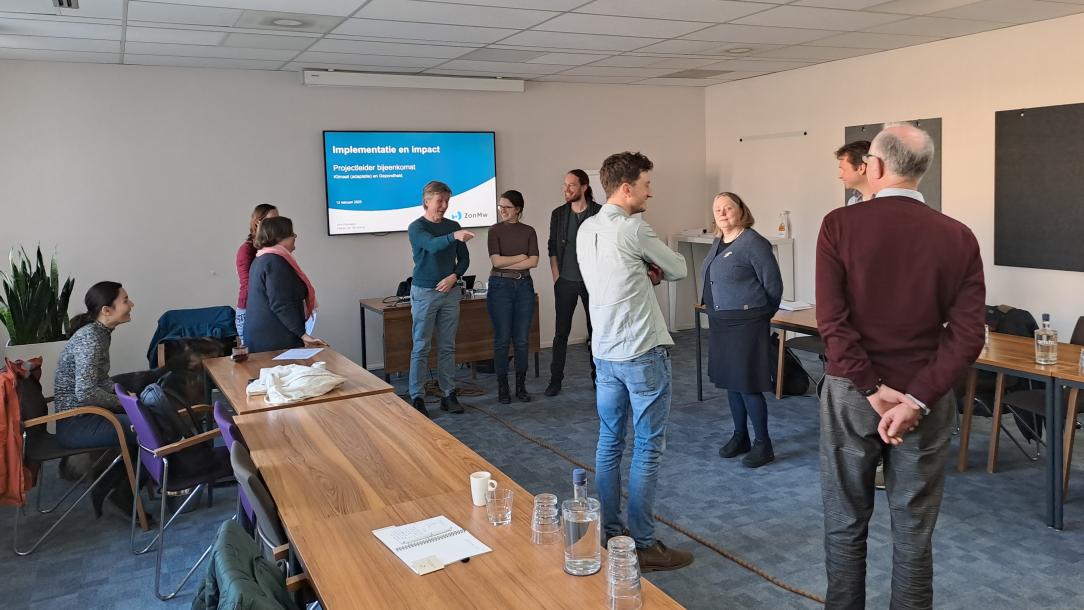
Projects funded by ZonMw must have impact. But what exactly is impact, and how does one achieve it? These questions were the focus of the climate and health project leaders’ meeting on implementation and impact. This article summarises the five key impact and implementation tips from the meeting.
Distance between research and practice
Besides funding projects, ZonMw also helps project leaders to enhance the impact of their research. In this context, impact equates to utilisation of knowledge, to use of the project results by practitioners, policymakers, educators and/or other researchers. Impact can be achieved by planning and implementing activities focused on the application of research results. But to achieve impact in daily life is difficult because of the implementation gap: the large distance that exists between science and practice. But this gap can be reduced and impact enhanced by applying the five tips in this article.
Tip 1: involve your stakeholders and target group at an early stage
Creating impact is a process that begins even before the research starts. It begins with the drafting of a research proposal, when you should start thinking about how to ensure that your results can be used by your intended target group, and about what you will need to do to make sure your results land with this group, through the right stakeholders. During the project you will further elaborate these plans and start implementing them. The key thing is to involve the right stakeholders and the target group.
Working with relevant stakeholders
Stakeholders are individuals and parties involved in a study. They have influence and useful contacts who might be able to help you achieve impact. It is therefore important to have good relations with these stakeholders. Do not just involve your stakeholders sporadically, stay in regular contact throughout the study. The start and end of the project are key moments, but you should also share interim results with everyone involved, to maintain their interest and enthusiasm.
Defining and reaching your target group
Who in society might be able to use your research results? This will be your target group. Besides researchers, you should also consider representatives from the worlds of policy, politics, education and healthcare practice. They have the knowledge and opportunity to introduce change, and need to be aware of the urgency of your research.
You can reach lots of people and raise awareness through the national media. But are the general public actually your target group? They will not always be able to help with the implementation of research results. In addition, media attention tends to be short-lived. The message will only get through if it is regularly repeated in the news. You can however alert your specific target group to the national attention, ensuring it attracts their notice and ends up on their agenda.
Investigate what channels you can use to directly approach your specific target group. Attend conferences or read journals to discover how to reach your intended audience in a targeted way. Ask members of the target group themselves which channels would be most appropriate – they are the ones who know best.
Learning from each other
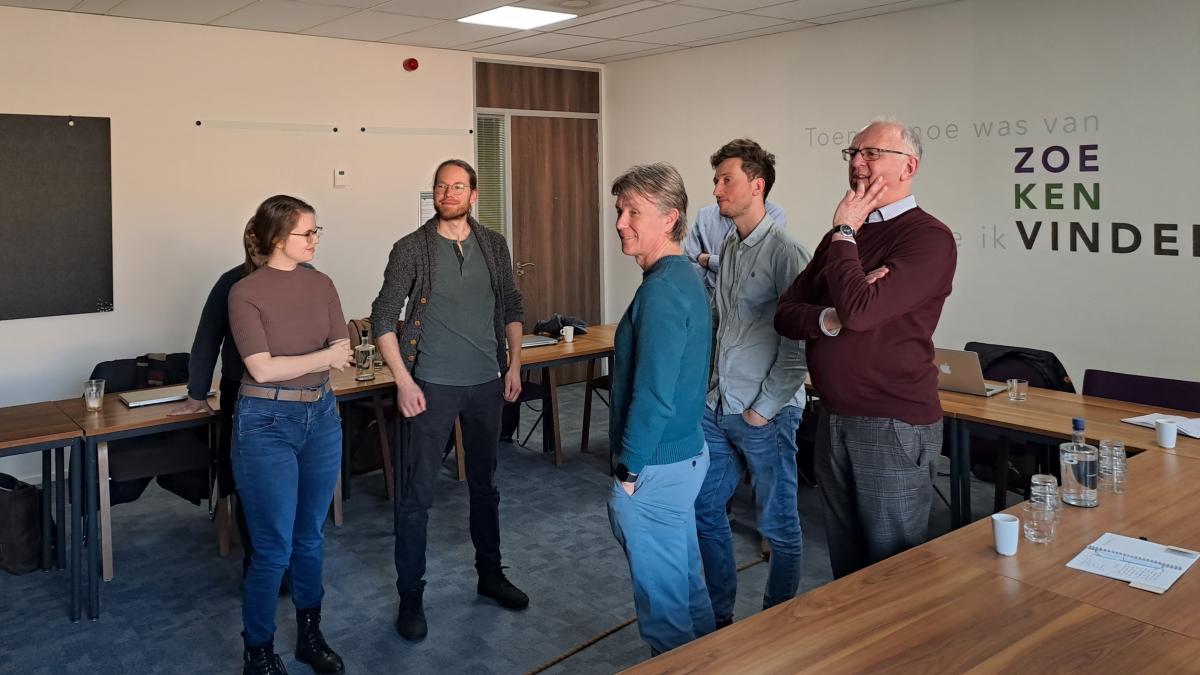
Project leaders of the 5 ongoing climate projects met on 13 February 2023 to brainstorm about implementation and impact. The event started with an implementation game, which prompted discussion. This was followed by a presentation by ZonMw implementation specialist Kris Pelleboer about the basics of implementation and impact.
In five rounds of brainstorming, the participants discussed project-specific opportunities for communication and implementation, designed to make knowledge applicable. One of the subjects discussed was how to get potential stakeholders and target groups interested in project results. Sustained involvement by residents in long-running projects was also discussed. The project leaders left for home full of enthusiasm and inspiration, ready to take the next steps towards implementation of their project results, and thus towards impact.
Tip 2: tell your story
Once you have defined your target group and stakeholders, it is time to announce your message to the world. Communication is key, so be sure to give it enough focus and funding. Get people engaged with the story of your project. Communicate progress and results from beginning to end. Engagement and repetition of information will mean your narrative gets through to people, making them more likely to understand the urgency of your work.
Timing
The timing of communication affects its reach and impact. Decide when your subject is topical, and use the moment. You can also include external parties working on the same subject in your communication strategy in order to reach more people.
Visualisation
An image, infographic or video can help convey a message to the target group more directly and succinctly. Make sure to use visualisations that are immediately clear. The message will get through best if the image does not contain too much information or visual elements. Tip: test your communications beforehand with your target group to ensure they think it is clear, and they understand the message.

Tip 3: build a learning community
You can keep people engaged with your study by building a ‘learning community’. This helps those involved in the project to see the value of their contribution, and it also enables them to benefit from the collaboration. Building personal relationships is very beneficial. Clear, open communication and articulation of expectations can also ensure that neither party ends up being unpleasantly surprised.
If you are engaged in ‘citizen science’ and working with volunteers, it is important to ensure that collaboration is equal, that there is no hierarchy. If all the input comes from the top, there is more chance that volunteers will drop out. The bottom-up approach works best. Ask participants for their input at an early stage, and incorporate it into the study.
It is always possible that mistakes will be made or problems will arise during the study. In that case, talk about it and decide together on the next steps and possible solutions. Be sure to convey a positive message and a sense of shared ownership in the event of a problem, rather than emphasising the negative. We can all learn from mistakes.
Tip 4: alternative possibilities for implementation
When it comes to transposing research results into implementation opportunities, it is easy to get caught up in the first few good options. Try looking a little further and considering whether there are feasible alternatives. Or scrap measures that do not work. Rather than solving problems, you can also try prevention as a solution. One good example of this came from the ‘Sustainable Care’ project. Surgery causes a lot of carbon emissions and plastic waster. It is good to consider how these waste flows can be reduced, but preventing the need for surgery in the first place is even better.
Tip 5: factor in uncertainties
Political dependence
Performing research naturally involves some degree of uncertainty. Sometimes you are dependent on politics. Around the time of an election, politicians tend to take fewer decisions and things get postponed. This can affect the impact of your research. You can consider this in your research planning and timing, but this is not always a realistic option. Be aware that you will sometimes be dependent on other parties and, if possible, include room for unexpected delays in your schedule.
Involving volunteers
Using volunteers in a research project can create dependence and uncertainty. People need to be willing to take part in the study, which may take up a lot of their time. It is therefore important to keep volunteers up to date on progress, which encourages them to remain involved throughout the study. It is also wise to recruit a fairly large pool of volunteers, to avoid shortages if any drop out.