


‘I now integrate sex and gender into my own research much more actively’
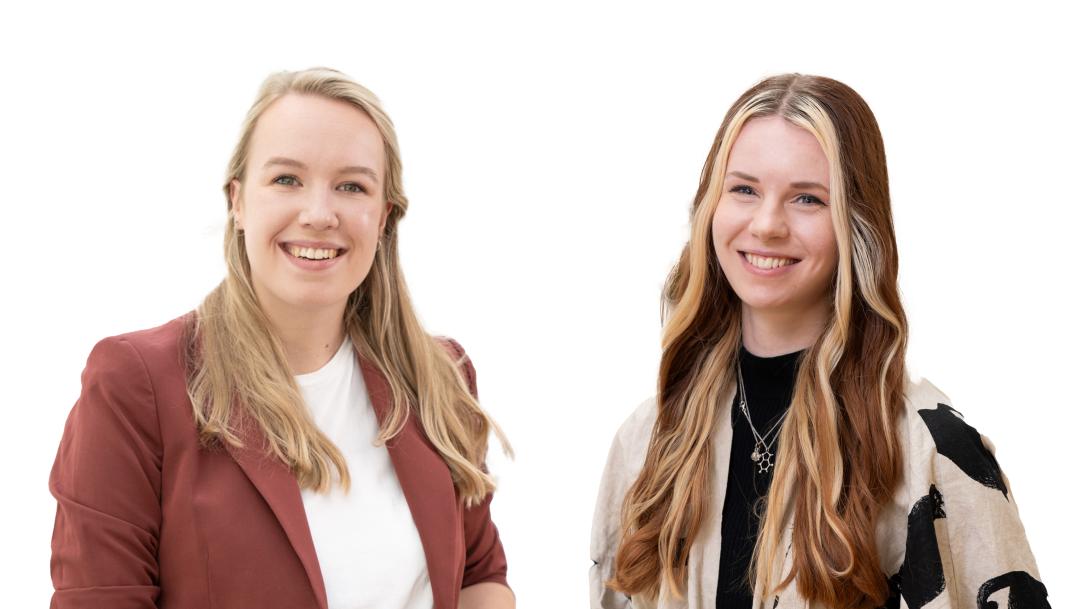
This summer, the sixth edition of the Gender in Health summer school will take place. Every year, the summer school brings together a diverse group of young international researchers to learn about the integration of sex and gender into scientific research. Former participants Emma de Brabander and Margot Morssinkhof share their experiences.
Why is it so important to integrate sex and gender into research?
In the past, men were often taken as the starting point in health research. As a result, there is more knowledge about the male body than the female body, even though we know that conditions often present themselves differently in men and women. Conversely, when it comes to issues such as migraines and anxiety, or the role of the parent, much more is known about women than men. In order to catch up on this knowledge deficit we are encouraging new researchers to pay attention to the differences in sex and gender in their research. This was an important reason for launching the Sex and Gender in Health and Research summer school six years ago, in collaboration with Erasmus MC.
Definitions of sex and gender
We use the term sex to denote the biological and physiological differences between people and between animals, in terms of their hormones, chromosomes and reproductive organs, for example.
Gender refers to certain socioculturally determined differences between people, such as roles, behaviour, expression and identity. Read more about the definitions.
Including sex and gender in your own research
During the programme, new researchers are given tools to help them include sex and gender as part of their own research. The purpose is to make them aware of the role sex and gender play in their research themes. According to Emma de Brabander, PhD student at Maastricht University, this goal has been achieved. ‘Since taking part in the summer school, I have become much more active in including sex and gender in my research. Since then, I have taken a much closer look at sex and, where possible, gender as well, as part of each and every project I have worked on or have started working on. Where possible, I also included sex-stratified analyses in my projects, papers and proposals.’
More attention needed for sex and gender
During the summer school, Ms De Brabander also learned to look beyond her own research. ‘During and after the summer school, I was a lot more aware of the fact that the world, including the scientific community, still pays little attention to sex and gender in healthcare and research. The most important lesson I have learned in this context is that we are by no means done changing the medical and scientific landscape. There are plenty of guidelines and resources available to improve scientific work, and there needs to be much more awareness of these options,’ said Ms De Brabander.
Broadening the horizons of researchers
Margot Morssinkhof is a post-doctoral researcher at Amsterdam UMC and was working on her PhD thesis on sex hormones when she participated in the summer school. ‘I had been working on the topic for a number of years, but the summer school was the first time that I realised that my research and work were a smaller piece of the puzzle in this broader topic of sex and gender. That was truly an eye-opener for me.’

There are plenty of guidelines and resources available to improve scientific work, and there needs to be much more awareness of these options.
Diverse combinations of areas of expertise
For Emma de Brabander, learning from other participants and their various backgrounds and levels of education was a real eye-opener. ‘During the workshops and conferences that I attend, I have observed that the participants tend to be relatively similar. That makes sense of course, because people usually attend events that match their area of expertise or interests. But this summer school was different, and I was positively surprised by the diversity of its attendees; from the variety of different countries they came from to the levels of education at which they worked, such as PhD students, postdocs, university lecturers. I found it very inspirational and learned a lot as a result.'
With one common goal
According to Margot Morssinkhof, despite coming from a variety of fields, the participants at the summer school all have one thing in common: they are all looking for good ways to include sex and gender in their work. ‘Because we share the same goal, cooperation across areas of expertise or subject areas is often very fruitful. Everyone approached the topic in different ways, and we were able to help each other further our research as a result.’
After the summer school
Both Ms De Brabander and Ms Morssinkhof have stayed in touch with their summer school peers since then. Ms Morssinkhof: ‘Whenever I find myself faced with concepts that I know less about, I now know where to find colleagues that can help me.’ Just like Ms Morssinkhof before her, Ms De Brabander is currently on the board of Start NVG&G, the Dutch association for Gender & Health for new researchers. She writes monthly newsletters about topics connected to sex and gender in medical and other research. She has also been able to bring her learned experiences to the Diversity & Inclusivity board she is on, where she works on organising various workshops on sex and gender (and diversity in general) in research at departmental level. In short, the contacts and learning experiences are being used in practice.
Erasmus Summer Programme
Each year, the Erasmus Summer Programme offers hundreds of students, researchers and professionals from the healthcare sector the opportunity to boost their scientific careers. The Gender and Health course, coordinated by Erasmus MC, offers participants the opportunity to familiarise themselves with the latest knowledge on the influence of sex and gender on men’s and women’s health during various life stages through lectures by a variety of Dutch and international speakers.
The Gender in Research workshops are coordinated by ZonMw and focus on improving the skills of new researchers in conducting health research from a sex and gender perspective.

