


Search on ZonMw
Search on the website
Filters
The results are updated as soon as you change a filter.
913
results
 Vidi funding has been awarded to 109 researchers from the scientific fields of domain Science (ENW | 42), Applied and Technical Sciences (AES | 13), Social Sciences and Humanities (SSH | 35), and Healthcare Research and Medical Sciences (ZonMw | 19). With the help of the Vidi grant, researchers can further develop their own line of research.
 For 25 years, NWO's Talent Programme has been helping researchers across the entire spectrum of science to advance their scientific careers with funding. The Veni, Vidi, Vici, and Rubicon grants give researchers the opportunity to develop their own line of research or to gain experience abroad.
 Read about the start of the European partnership One Health AMR. This programme aims to reduce the global antimicrobial resistance.
 Researchers at Oncode Institute and Princess Máxima Center have developed a new human model of the brainstem that is changing how one of the most aggressive childhood brain cancers can be studied.
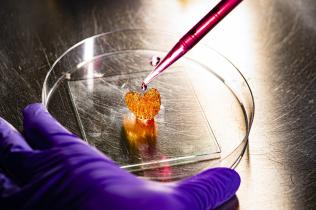 Two unique projects have been honoured in the Create2Solve Phase 2 grant round: one for the development of an in vitro model for arthritis and one for the development and standardisation of complex culture methods with animal-free reagents. The 2 consortia, which include companies, will now each receive €1 million to work on these.
 The laureates of the Rubicon 2025-1 round are ready to take off. They will be working on a wide variety of topics, but all of the honoured projects have something in common: their contribution to making impact.
 The NWA call for proposals for the further Development and Regulatory Acceptance of Chemical Test Models (Do-ReACT): animal-free test methods for the safety assessment of chemical substances is expected to open in November 2025.
 Improving the quality of surgery with video analysis. The crosstalk between sodium homeostasis and the gut microbiome. Can nature's microbes keep allergies away? These are 3 of the 200 projects who have received a Veni grant. The grant is an incentive for researchers to further develop their own research ideas over the next three years.
 Animal research often fails to predict human responses and raises ethical concerns about the morality of using animals for experiments. Six research projects focused on osteogenesis, rare diseases, schizophrenia, osteoarthritis, microbial fermentation and systemic sclerosis now receive funding to further develop their animal-free method.
-
Researchers from Science (ENW | 57), Applied and Engineering Sciences (AES | 15), Social Sciences and Humanities (SSH | 54), and Health Research and Development (ZonMw | 23) receive Vidi grants. This enables the laureates to develop an innovative line of research over the next 5 years and further expand their research group.
 Funding will become available in early 2027 for collaborative projects that contribute to expanding fundamental knowledge of the onset, progression and/or underlying mechanisms of ME/CFS as a multisystem disease.
 Hormone therapy can help many people with breast cancer. These drugs unfortunately do not work for every patient and even those who do respond often develop resistance over time. Patients with metastatic disease usually need to switch to other, often more intensive treatments.