


Stakeholder meeting Accelerating Transition Towards Animal Free Research and Innovation
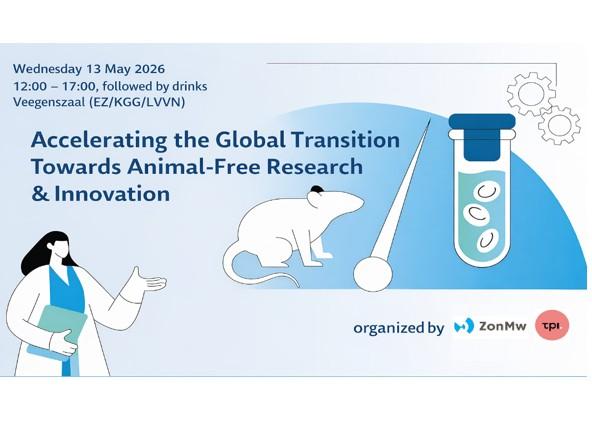
Are you working in the field? Join us on this interactive event on the transition to animal-free research and innovation and explore with us what is needed to further accelerate the international adoption of animal-free testing models.
ZonMw and TPI warmly invite you to this stakeholder event
ZonMw and TPI warmly invite you to this stakeholder event hosted by three distinctive transdisciplinary research consortia: AFARA, SAFE and Valuing Testing. Each consortium offers unique perspectives on the transition to animal-free science and innovation, reflecting their expertise in toxicology, social sciences, humanities, regulation and practice. This event will bring together key stakeholders to reflect, align, and identify opportunities for collective action.
The global scientific community is decisively moving from animal experimentation to using more human-relevant New Approach Methodologies (NAMs). The transition toward animal free innovation appears to be entering an accelerated phase. What is driving this acceleration? And how can we, as a community, contribute to meaningful, global progress? The importance of transdisciplinary research and broad stakeholder participation will be highlighted by discussing their significance during an afternoon of exciting sessions.
During this gathering, we will explore:
- Emerging developments and breakthroughs shaping the transition,
- How AFARA, SAFE, and Valuing Testing contribute to the acceleration.,
- How innovative, participatory methods from the projects can help interpret transition dynamics and facilitate stakeholder dialogue and input.
Event details
Date: Wednesday 13 May 2026
Time: 12:00 – 17:00, followed by drinks
Location: Veegenszaal Bezuidenhoutseweg 73, Den Haag (EZ/KGG/LVVN)
Your perspective and expertise are essential as we work together to advance this global transition. The event is free, but registration is required. Please note! The final deadline for registration is Wednesday 6 May via this link .
-
- Walk in lunch
- Welcome and introduction
Plenary lectures by Dr. Laura Holden and Prof. dr. Mirjam Luijten
Parallel sessions exploring interdisciplinary collaboration and methodological design
> Complexity, Uncertainty, and Trust in Chemical Safety Testing (Valuing Testing)
An exploration on how varying levels of model complexity in NAMs and animal-based methods shape perceptions of knowledge, uncertainty, and evidentiary value in chemical safety assessment. We aim to discuss appropriate methodological approaches for systematically examining how these factors influence the transition toward animal-free safety testing.
> Transition science and transformative governance (SAFE) – We aim to discuss our research results and experiences on the analysis of barriers and facilitators towards animal-free testing methods. Specifically, case studies on pharma and on the EC roadmap towards phasing out animal studies for chemical safety testing have been addressed.
> Pathways for acceptance of integrated chemical safety testing strategies for endocrine disruption (AFARA) We aim to discuss our research results and experiences on the functioning of pathways for regulatory acceptance of animal-free and integrated testing strategies for the identification of endocrine disrupting chemicals. We will also reflect on the value of the different methodological approaches within the AFARA project to examine and contribute to regulatory acceptance processes.• Wrap up and closing
• Drinks and informal networking
More about the consort
- The SAFE consortium investigates how transitions toward animal-free safety testing for chemicals and pharma can be effectively governed, focusing on transformative approaches towards accelerating change in the EU, the Netherlands, and the US.
- The AFARA consortium works to create the conditions for regulatory acceptance of human-relevant, animal-free models for endocrine disruption, identifying challenges and opportunities within European legislation.
- The Valuing Testing consortium examines the ethical values that stakeholders assign to animal-free methods and explores how different types of models can be integrated into safety assessment procedures.