Animal-wise
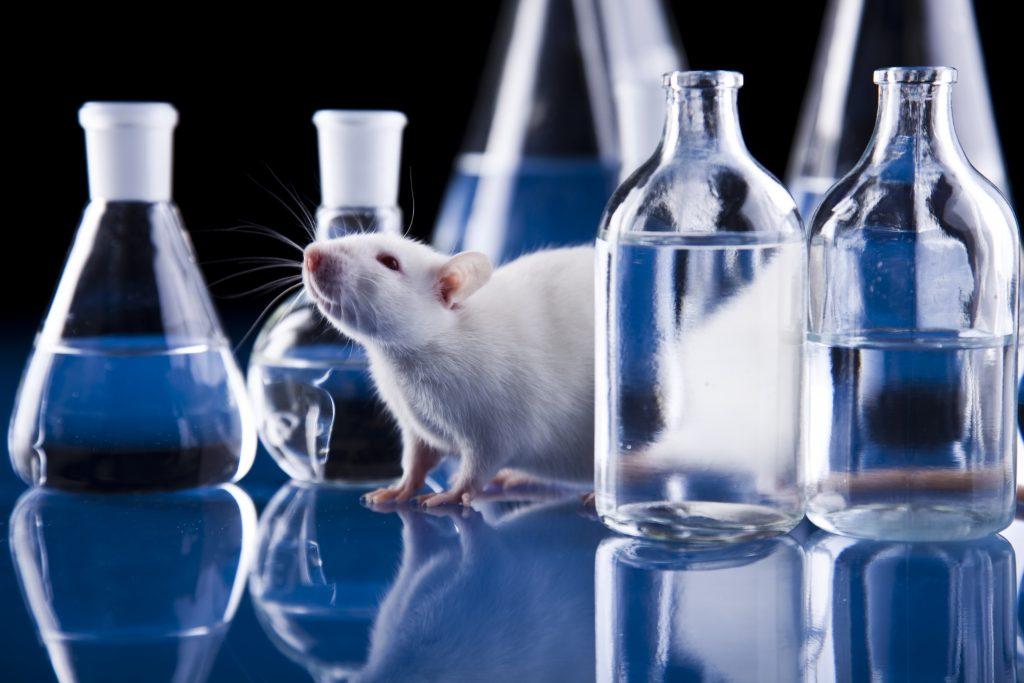
ZonMw is committed to the development of animal-free research methods. However, we realize that laboratory animals cannot (yet) always be replaced and that animal experiments are sometimes necessary to properly answer a research question.
Animal testing and alternatives
Over the past centuries, animal experiments have made a major contribution to understanding how our bodies work, how diseases arise and how they can be treated. But many new therapies, which are effective in animal models, turn out to work less well or even not at all for humans. That is why there is a hard search for new methods and models, the results of which are more translatable to humans. Think of animal-free models, for which human cells or data are used, such as organoids, organ-on-chip models or in silico models. ZonMw actively contributes to the transition to animal-free innovations by stimulating the (further) development, acceptance and implementation of these promising methods.
Animal-wise policy
Although many new animal-free models have already been developed, we realise that laboratory animals cannot (yet) always be replaced and that animal testing is sometimes necessary to properly answer a research question. To ensure consistent and responsible animal testing, we will therefore introduce an 'animal-wise' policy from 2025. This includes:
• We encourage researchers to do their research without animal testing. And, if animal testing is necessary, that this is done as well and transparently as possible.
• We ask applicants, referees and committee members to take a critical look at the necessity and implementation of the animal experiments.
• We set specific conditions for successful applications that increase the quality and transparency of animal testing and can prevent unnecessary repetition.
Animal-wise policy goes beyond the 3Rs
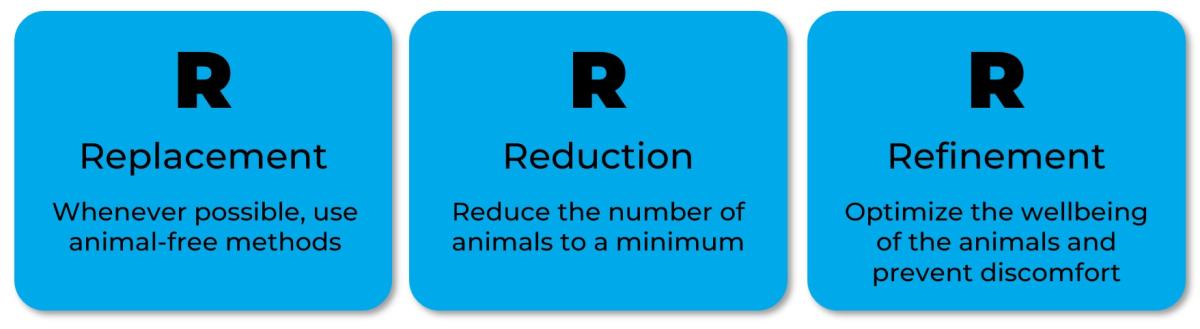
Experimental policy demands the highest possible quality, transparency and ethical responsibility, and goes beyond the 3Rs: Replacement (where possible animal testing), Reduction (no more than the necessary number of laboratory animals) and Refinement (optimizing the welfare of the animals used). Experimental work requires a justification of the necessity of animal testing on the one hand and a commitment to maximizing the quality, transparency and ethical integrity of these animal experiments on the other.
Legal and ethical basis of our animal-wise policy
Legal and ethical basis of our animal-wise policy
ZonMw's Animal-wise policy is legally anchored in the General Terms and Conditions Governing Grants of ZonMw and the Experiments on Animals Act. These require that animal testing is only permitted if there are no animal-free alternatives.
ZonMw's role is complementary to that of the Central Authority for Scientific Procedures on Animals (CCD), Animal Experimentation Committees (DEC) and the Animal Welfare Body (IvD), because ZonMw also involves scientific experts on this topic. This makes it possible to critically examine the methodical and ethical aspects of animal testing, and the necessity thereof, at different levels. This strengthens ZonMw's responsibility in the scientific field and contributes to better research and a possible reduction in unnecessary animal use.
Essential tools
Important in the animal-wise policy is a critical consideration of the necessity and implementation of animal experiments. Applicants for ZonMw grants will have to explain why they want to conduct animal experiments, and why these cannot be replaced by animal-free alternatives.
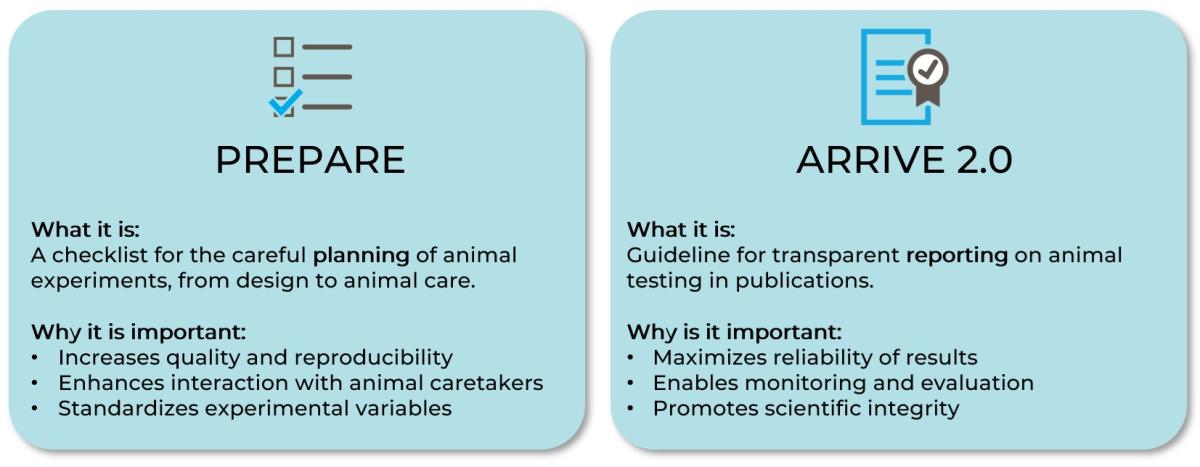
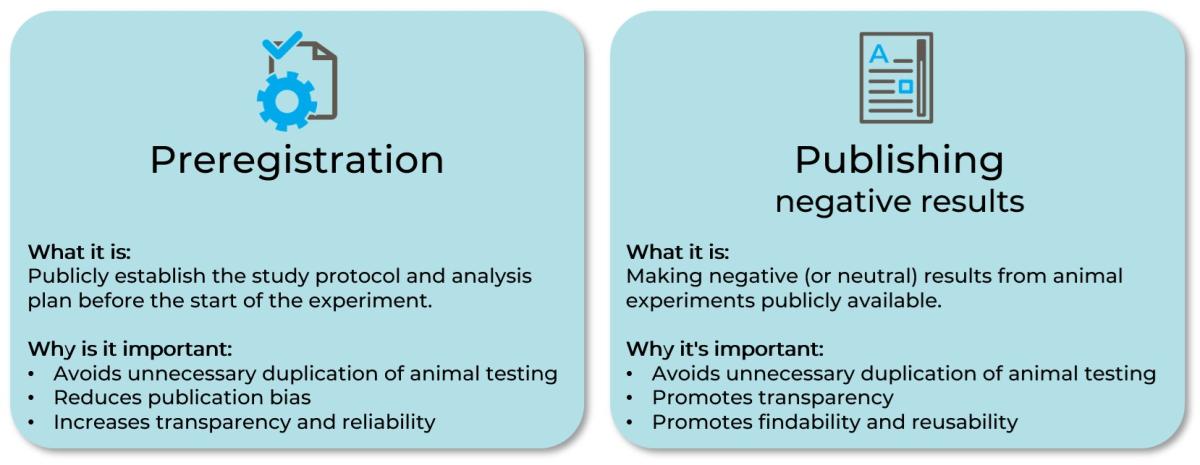
In addition, we will focus on 4 instruments for the implementation of the animal research when an application is granted: PREPARE, ARRIVE 2.0, Preregistration and publishing negative data. Together, these form an optimisation of animal research and contribute to the prevention of research waste:
- PREPARE: Planning Research and Experimental Procedures on Animals. An internationally recognized, standardized checklist for planning animal experiments.
- ARRIVE 2.0: Animal Research: Reporting of In Vivo Experiments. An internationally recognized guideline to maximize the quality and reliability of published research and to enable others to better research, evaluate and reproduce the research. The ARRIVE 2.0 guideline was revised in 2020 and now includes two levels:
o Essential 10: Basic requirements such as sample size calculation and randomization
o Recommended set: Contextual information about e.g. blinding protocols or analyses. - Pre-registration: Publicly recording the study protocol and analysis plan before the start of the experiment on platforms such as preclinicaltrials.eu. This prevents unnecessary publication, reduces publication bias and increases transparency.
- Publishing negative data: making unpublished results of animal research with neutral or negative outcomes publicly available. This prevents unnecessary repetition of experiments, promotes transparency, and contributes to better findability and reusability of data.
What else does ZonMw do?
With the ZonMw programme More Knowledge with Fewer Animals (MKMD), we stimulate the development, findability, (re)usability, acceptance and implementation of animal-free innovations. We are carrying out this programme on behalf of the Ministry of Agriculture, Nature and Food Quality.
We run the programme for the Dutch Research Agenda Animal-free models: acceptance and implementation that focuses on the acceptance and implementation of existing animal-free innovations.
ZonMw is one of the partners in the national collaboration Transition to Animal-Free Innovation (TPI). TPI aims to position the Netherlands as a catalyst in the international transition towards animal-free innovation. As a TPI partner, ZonMw supports initiatives that help organisations and researchers take concrete steps towards animal-free innovation and the implementation of the 3 R's (Replacement, Reduction and Refinement).
2 valuable TPI tools are:
- Beyond Animal Testing Index (BATI) – From insight to impact
The BATI is a transparent, objective and independent tool that gives organizations, such as universities and UMCs, insight into their impact and progress in the field of animal welfare and animal-free innovations. In this way, they can not only further shape their policy and practice, but also learn from each other. The BATI offers a stimulating frame of reference that promotes openness and collaboration, with the common goal of learning from each other and continuously improving biomedical practice.
Read more about the BATI - Suppo3Rt – Independent advice tailored to your research
Do you encounter complex issues about animal testing or the possible use of New Approach Methodologies (NAMs) during the design or execution of your (bio)medical research? The Suppo3Rt support desk offers easy access to independent NAMs expertise. After a short intake, Suppo3Rt organizes a meeting with qualified experts. This results in confidential and non-binding advice, so that you as a researcher can make well-founded choices for your project.
Read more about Suppo3Rt
We also work together with the following organizations and initiatives:
- Stichting Proefdiervrij (The Dutch Society for the Replacement of Animal Testing)
- Dutch Research Council (NWO)
- RIVM
- NCad
- HollandBio
- Medicines Evaluation Board (MEB)
- Health~Holland
- Dutch Research Agenda
- Human Measurement Models (HMM)