


How harmful are microplastics to our health? Toxicologists call in Science for knowledge gaps to be bridged
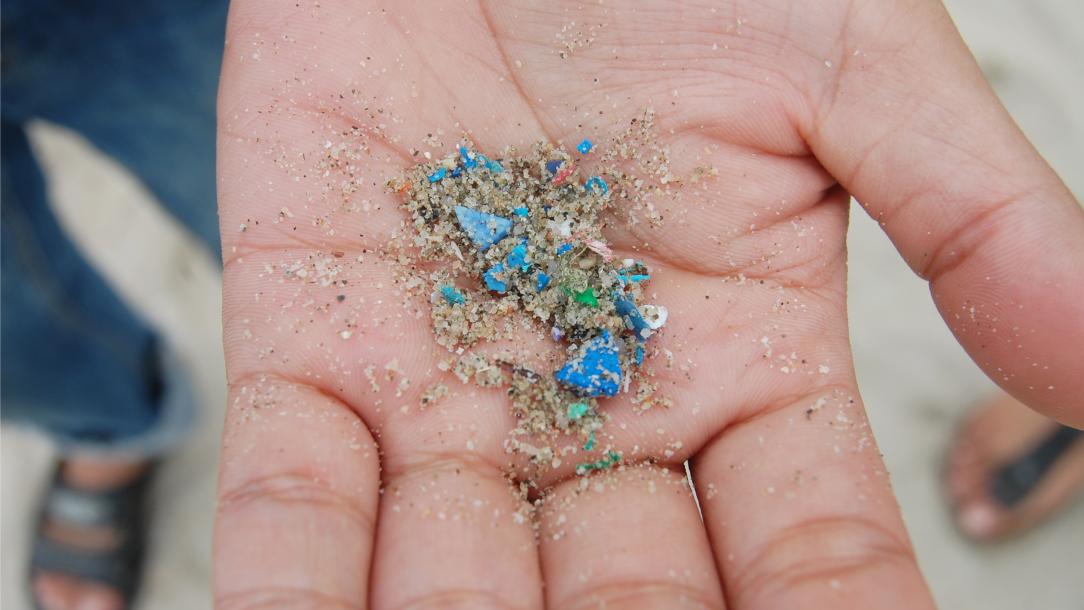
More research is needed into the health risks of microplastics, argue Dutch toxicologists in the renowned scientific journal Science. It is still far from clear whether these new environmental contaminants form a serious risk for human health, and so it is important to determine that quickly.
Microplastics are everywhere
Microplastics, the collective name for small and very small plastic particles, occur everywhere. They can enter our body through a variety of routes (for example, via the air, food and water). The exact size of that exposure and what microplastics do inside our bodies is still largely unknown. What we definitely do know is that plastic particles are almost never broken down, and there are indications that they can be harmful in various ways.
Health risk
In the article published in the scientific journal Science, toxicologists Dick Vethaak from Deltares and emeritus professor at VU Amsterdam, and Juliette Legler, professor at Utrecht University, provide insight into the current state of research into microplastics. According to Vethaak and Legler, it is still far from clear whether these new environmental contaminants form a serious risk for human health. Crucial knowledge about exposure and harm is missing as a result of which far too many uncertainties remain. Moreover, no good measurement methods exist yet to measure the extremely small particles in the body. And we do not yet know how the immune system deals with these foreign particles either. Harmful chemical substances and possibly pathogenic organisms that attach to the surface of the microparticles can be transported into the body. Far more research is needed to be able to make a proper assessment of the risks. Therefore the authors make a clear appeal for the critical knowledge gaps in the research to be quickly bridged so that health policy and risk-limiting measures can be supported in good time.
Internationally leading role
The Netherlands currently leads the way in research into the health risks of micro- and nanoplastics. For example, during a virtual meeting held on 11 January 2021, the results of 15 breakthrough projects funded by ZonMw were announced. During the meeting, ZonMw also presented a strategic knowledge agenda to the State Secretary for Infrastructure and Water Management, Stientje van Veldhoven. This agenda was written on behalf of her ministry. The new research project MOMENTUM was also introduced. This is a consortium of 27 research institutes and companies that Legler and Vethaak will coordinate. The aim of the multidisciplinary research is to form the basis of the research infrastructure for microplastics and health in the Netherlands, which all parties involved can build further upon in the coming decades.
Collaboration and knowledge sharing with, amongst others, the polymer industry and medical world in the programme is unique and encourages targeted research and the finding of practical solutions.