


Research integrity: are researchers and directors taking responsibility?
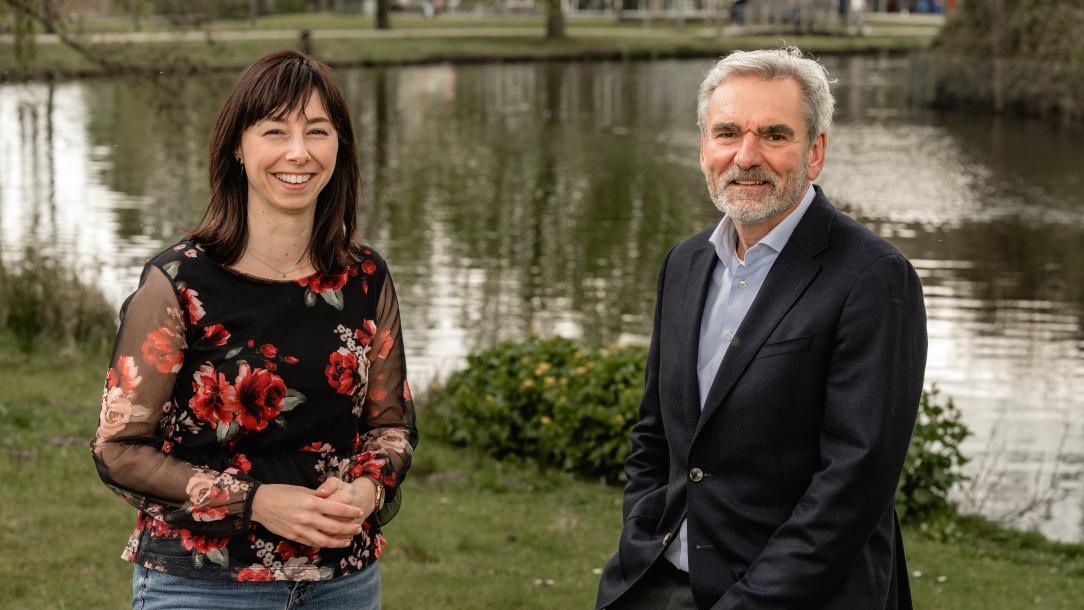
In 2019 Rob van der Sande, lector at the HAN University of Applied Sciences, launched a ZonMw project to develop integrity training courses for the universities of applied sciences (UASs). Three years on, he is conducting an interim review with Susan Berentsen, UAS lecturer and leader of the implementation project. Is research integrity more than data management, privacy and statistical significance? Why did they decide to focus on training for young researchers?
What prompted you to launch this project on research integrity at the UASs?
Rob: ‘Until eighteen months ago, I was lector Primary Care at the HAN University of Applied Sciences. I’d been dealing with integrity for years. Among other things, I worked with a young lawyer to set up the Ethics and Research Committee for my faculty. When I joined the HAN, I felt that there was a need to develop this area much further, even though the universities had already taken the first steps towards working on research integrity. The incredible situation arose that our own PhD students, for example, could only be taught about research integrity at university level. I thought, why don’t we have that in the UASs? After all, isn’t it our mission to develop high-quality, ethically responsible and practice-oriented research? And that is why, partly on the advice of Lex Bouter, I submitted a proposal to the ZonMw programme Fostering Responsible Research Practices (FRRP).’
FRRP project "Translating researchers’ Experiences into Training on Research Integrity at universities of Applied Sciences"
Project leader: Rob van der Sande (lector at the HAN University of Applied Sciences)
Implementers: Susan Berentsen (HAN) and Fenneke Blom (Amsterdam UMC)
"Translating researchers’ Experiences into Training on Research Integrity at universities of Applied Sciences" is an implementation project of the ZonMw and NWO programme Fostering Responsible Research Practices (FRRP). By developing a training course for UAS researchers, Rob van der Sande wanted to raise their awareness of the integrity dilemmas that can arise in research and teach them how to open such dilemmas up for discussion.
In October 2018, the Dutch Code of Conduct for Research Integrity came into force for all research institutions, including the universities of applied sciences. Signing this code requires the UASs to provide their researchers with training and education in responsible research practices. In cooperation with the Netherlands Association of Universities of Applied Sciences (Dutch acronym VH - Vereniging Hogescholen), six UASs took the initiative to develop a training course on Responsible Research. Interviews with twelve researchers on practical examples of integrity issues and moral dilemmas in their work provided crucial input in developing the basic training and training for teams.
Since early 2022, experienced researchers from various UASs have been trained to teach the course. All materials are provided, amongst others by training coordinator Susan Berentsen and The Embassy of Good Science.
This project implemented the results of the FRRP project Research Integrity in the Dutch Universities of Applied Sciences (TETRIAS ). The researchers also adopted existing working methods from the Netherlands Research Integrity Network (NRIN) and the VIRT2UE project and incorporated them into the training.
How did you approach the development of the course?
Susan: ‘First, my co-coordinator Fenneke Blom and I conducted twelve interviews with researchers from various UASs. Based on the results, we examined which competencies were regarded as most needed and which topics the training should cover. We also investigated the conditions the researchers considered important. Should the training be compulsory and should the students from the different disciplines be taught together or in separate groups per discipline? Is there a need for separate training for junior and senior researchers, English or Dutch speakers, and the number of topics?
We found that topics such as “data management”, “privacy” and “statistical significance” were cited particularly often. Though research integrity is more than that, we nevertheless chose to focus specifically on raising researchers’ awareness of research integrity and the scope of this term by designing a basic individual course. Because we sensed that such awareness is a precondition for really engaging with others around integrity issues. During the basic course, students reflect on research integrity topics with the aid of assignments and write their own portfolio. One of these assignments is: “Look at the Code of Conduct for Research Integrity and then at your own research. What stands out, what is feasible and what is not?” A few assignments require researchers to work in pairs, so they can discuss research integrity in a safe atmosphere. In addition, the students set personal learning objectives enabling them to guide and direct the assignments themselves. We trialled the basic training course with nine students. Then we used the information from this pilot to optimise the individual course.
Several interviewees also cited the importance of a research culture and the fact that a research team should really be able to train together. In response to this, a team training course was developed in addition to the basic course. The team course is aimed at research teams and uses various forms of dialogue to discuss integrity issues and a responsible research culture.’
Rob: ‘Once we’d developed the course, we realised that we actually only had two trainers, Susan and Fenneke. But, of course, the two of them can’t serve all of the UASs. So, we thought, we need a train-the-trainer course. We ran that course for other teaching staff and researchers: senior staff and ethics committee members who are interested in seeing what is available and what we can do with it.’
Susan: ‘We now have two groups of around ten people who have attended a train-the-trainer course for the basic training and a couple more courses are in the pipeline. We also agreed to check in with them after six months to see if they have put the basic training into practice and how it is going, and what they’ve been able to do with it, so we can exchange expertise as well.’
Why did you develop the course for young researchers?
Rob: ‘We do, of course, have the lector positions and research groups within the UASs, which always include university-educated and experienced researchers. But where I saw the most pressing lack of anything on research integrity was among young researchers. In the UASs, these are often researchers with little academic research experience who are working as lecturers at the same time. This group – quite understandably – has little awareness of integrity issues. So that was where I saw the most pressing need.’
Susan: ‘To expand on that, the pilot included experienced researchers as well. They took part voluntarily and found it very useful to talk about research integrity and the issues surrounding it. For the senior researchers, it was often inspiring to discuss the topic of research integrity with each other, and especially with researchers from other fields.
For junior researchers, it’s mainly about raising awareness. What exactly is it all about, what does it involve? It’s obvious that researchers shouldn’t falsify or plagiarise. But there’s also a very large grey area when it comes to the question “what is good research and what makes a good researcher?”. And that’s precisely what junior researchers need to become more aware about.’
What do researchers mean by research integrity?
Rob: ‘The researchers we interviewed tend to narrow research integrity down to anything to do with privacy and data management or, less narrowly, to fraud or sloppy science. But, of course, research integrity also includes what I call the virtue approach: “what makes you a good researcher?” and “How do you handle potential conflicts of interest?”. This is certainly an area about which there’s still little awareness among UAS researchers. Though it’s considered important, it is not talked about openly very much. The same applies to questions that researchers may have about the quality of research, or the guidance given by senior researchers.’
Is there a difference between universities and UASs when it comes to integrity dilemmas?
‘I thought for a long time that UASs were different from universities in this regard. But that’s not really the case. I believe that around a third of UAS lectors have their own company or are paid directly by a company or institution. But there are also many university professors who are paid by third parties, such as the “special” or endowed professors. I don’t think the numbers are very different. One difference might be that the UAS may take advantage of the law of the handicap of a head start. They may be able to get some things done faster because they are starting out more or less from scratch in this area.’
Can other target groups also benefit from the training?
Susan: ‘The interviews with lectors yielded a new research question, focused on strengthening teaching about research integrity among UAS students working on their thesis research. For example, students often have questions about what to do with disappointing results. Should or can they simply discard them? Or, say a pilot has been conducted in an organisation and it was the client who recruited the respondents for the students. The students’ questions make a great starting point for discussion.
I recently received a Comenius grant to identify students’ training needs. And in August, I’ll start implementing a working method for research integrity within student teaching. I’ll be looking mainly at what sorts of things students are interested in, how you can raise that for discussion and how they experience these things? And working mainly with real-life case histories. The manual will also provide lectors with tools to discuss research integrity within teaching. We are starting now with thesis teaching, but the topic could also be extended to first-year students who need to review the existing literature, for example, in order to be able to substantiate an intervention as part of their work.
I’m currently looking into the possibility of joining a research group to share research experience. There are various UAS lector positions, but not one where the holder deals specifically with integrity. What would be really nice is if every UAS had a working group on research integrity. Such as training for lectors and student researchers and conducting scientific research – so that research integrity receives continuous, systematic attention.’
Rob: ‘It would help the UASs enormously if one or two researchers could start conducting research into integrity at all UASs in the reasonably short term. Like the survey carried out by the Netherlands Research Integrity Network for universities. That would enable us to gain insight into the current situation and it could be an important tool to aid further development at the UASs.’
Is there support within the UASs for work on research integrity?
Rob: ‘What makes it tricky is that you have around twelve larger-sized UASs in the Netherlands. They all do indeed feel the need to take up the subject in some way. Then you also have the slightly smaller institutions, which sometimes don’t carry out much research. These may be working on it but feel less urgency. At the HAN research ethics committee, we sometimes help them to set up integrity committees. But it’s a slow process. And I can imagine why. You have one or two lectors who do want to address it, and the rest who, as they see it, are not affected by it. I also know of some UASs that do have a committee but don’t yet receive any applications for assessment, so it’s apparently not a pressing issue. So I think it’s definitely not a done deal, not even at the larger institutions.’
Susan: ‘My experience has been mostly positive. When we didn’t quite have all the funding for the training, we ran the train-the-trainer course for the basic training on demand. The UASs that approached us were enthusiastic and keen to get started with the training within their own institution. These may be precisely the people who would prioritise the issue anyhow, but I just want to point out that this group does exist. We did think about whether training should be mandatory. But you want it to come “from within”, you want people to motivate themselves to engage with it. In the end, what you really want is a cultural shift.’
Rob: ‘Can I add something? My idea at the time was to develop a course for all the UASs, not just the HAN. Six other UASs worked with us on the grant application. But I felt that all the UASs should take it up collectively. My hope was that the Netherlands Association of Universities of Applied Sciences (VH) would get behind it too. That hope turned out to be in vain. They did participate in the project’s steering committee, but unfortunately that’s where it ended. I was hoping to work with the VH to provide funding for the trainers and facilities. After all, the VH signed the code of conduct on behalf of the UASs. It’s a shame it didn’t work out. The current training offer depends on two keen researchers who have developed something and sometimes manage to inspire a UAS. But that’s not the way I’d thought it should work.
And there’s no active role of the UASs’ executive boards. By the way, maybe this is a difference between UASs and universities. University directors are often former or current professors. They have experience in research. Our directors often have a different background, with experience in a particular sector, not necessarily in research. That probably does make the awareness-raising process different and trickier. For example, do UAS directors understand the importance of a good research culture and the investment needed in order to achieve it? My impression is that, at least at the moment, there’s little evidence of that. That’s a major sore point for me.’
Susan: ‘The vulnerability of this topic is that it also lacks an immediate measurable effect. Investment doesn’t instantly deliver anything that can be measured. In the end, it’s about the quality of research and that is just as important as the quality, which is easier to control.’
How can research integrity at UASs be increased in the future?
Susan: ‘I think it’s important to end by saying that there is evidently a great need for knowledge about research integrity and relevant training. The topic is current and fast-moving, even if it varies from one UAS to another. People come to me or Fenneke for training of their own accord. And during the pilot course, despite the tight deadline, in no time at all we had a group of people who voluntarily devoted three half-days to the topic. I was pleasantly surprised by that. So there’s a demand for training, but we’re by no means in a position to meet that demand in all instances.’
Rob: ‘I completely agree. Susan and Fenneke have laid the foundations, and there is definitely a great need for it. But what now? There needs to be some sort of continuation. And as far as I’m concerned, that involves getting the directors on board too, so we really have something that spans all the UASs. For me, that’s the most important step now.’
More information
- ZonMw programme Fostering Responsible Research Practices.
- This programme is part of the initiative Research on Research with which ZonMw promotes the study of science itself. This will involve examining the current system and culture of science. Research of this type is important to ensure robust, high-quality research.
- The project team published an article on the development of their training course in the journal FACETS, titled: How to set the agenda for training in Responsible Conduct of Research? Using the target audience as a narrative guide. AUTHORS: Blom, Fenneke; Berentsen, Susan; van der Sande, Rob, in: FACETS (2022-)
The authors’ article contributes to knowledge in the field of training development by documenting how input from the target group and interviews was translated into a training course and by describing the step-by-step approach, substantiated design process and justification of choices made. The key message is to involve the target audience in training development by identifying their needs.